
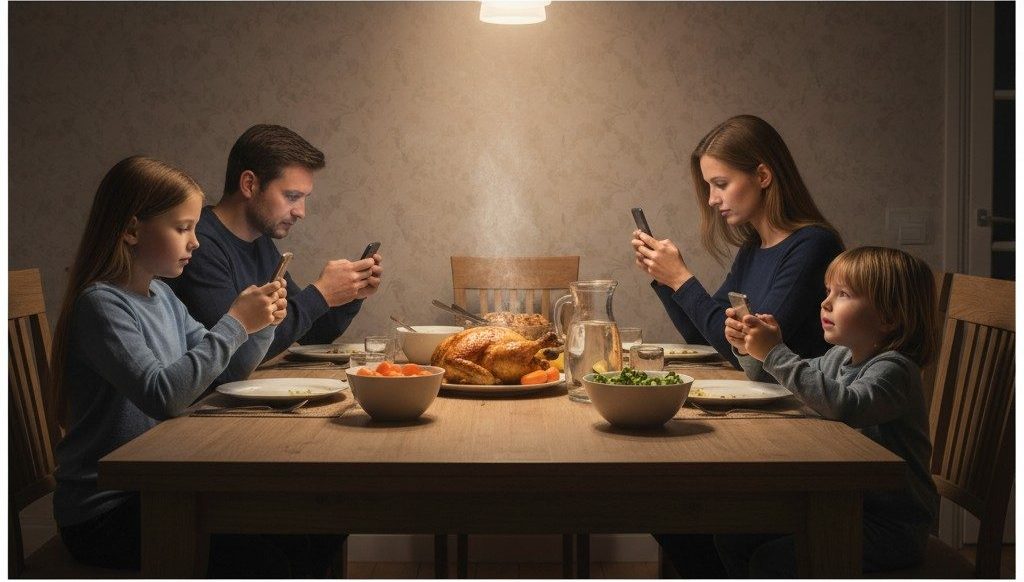
In India, 73.3% of children below the age of two have excessive screen time.
The Reality of Screen Addiction in India
When was the last time you touched grass? It’s such an irony that telephones were invented to connect us and ended up isolating us from the world. Has it ever happened to you that you opened your phone without knowing what you opened it for? Mobile phones have become contemporary drug syringes, delivering a constant stream of digital dopamine, and are reshaping the very foundation of parenting.
The brain development of a baby depends on rich interactions with the primary caregivers. But now, screen time is replacing bonding time. Baby has to eat his lunch? Let him have the phone with food. Baby cries inconsolably? Let him have the mobile phone. Approximately 90% of a human brain’s development occurs by age 2. If a baby is nursed with a phone addiction, the rest of his life will come second to using the phone.
Mental Health Consequences
Such early and unregulated screen exposure puts children at a heightened risk of succumbing to a plethora of mental health problems like ADHD (Attention Deficit Hyperactivity Disorder), GAD (General Anxiety Disorder), OCD (Obsessive Compulsive Disorder), ODD (Oppositional Defiant Disorder), Conduct Disorders, ASPD (Antisocial Personality Disorder), and ASD (Autism Spectrum Disorders) .
Parental Behavior Sets the Pattern
Parents are the subconscious role models of kids. Kids naturally tend to emulate parental behaviours. Parents using their phones aimlessly around the kids encourage them to do the same. Moreover, parental neglect (because parents are “too busy” scrolling) leads to kids discovering companionship with the screen. Consequently, when they grow older, they may resort to substance abuse to escalate the high they derived from watching endless reels throughout their childhood. If you avoid indiscriminately using your phone, your child won’t either.
In many nuclear households where time and attention are stretched thin, screens quietly fill the gap created by decreased familial interaction. This is reflected in a research paper, which showed nuclear families exhibit a significantly higher prevalence of excessive screen time (79.4%) compared to joint families (48.7%).
It’s not socially acceptable to give your kids booze, porn magazines, or cigarettes. Giving your kid a new phone on his birthday can be just as harmful, or even worse. In this age of compulsive overconsumption of mobile phones, society is getting wrecked from within. Society doesn’t realise the urgency of the matter. An Indian teen has an average screen time of 6.8 hours, which is more than one-fourth of their day, and if you think about it, eventually 1/4th of their lives. Children often mirror their mothers; if she is on her phone more, so are they. It has been established in neuroimaging studies that internet addiction is associated with structural changes in brain regions.
The Hidden Dangers: From Addiction to Crisis
In a conversation with a pediatrician, he revealed that he noticed a “quiet” pattern emerging in children displaying behaviour too strange to ignore. This addiction is more prevalent and severe in preschool children and teens (especially those aged 15 and above). He discussed cases where radical behaviour had morphed into something darker, like suicidal thoughts.
Many vulnerable kids fall prey to such unregulated content, which is sensationalised by repeated coverage by media houses, which can act as a trigger to copycat suicide (Werther effect). This “harmless addiction” turns into harmful exploitation in no time. For instance, let me take you back to 2016, when a spike in death reports was reported due to Pokémon Go (145,632 car collisions, 29,000 injuries, and 256 deaths across the United States within 148 days of game launch) and Blue Whale Challenge (an online suicide game which led to 130 deaths), the choking game, fire challenge, Tide Pod challenge, skull breaker challenge, water intoxication challenge, blackout challenge— it’s an endless list. Such phenomena exploit psychological vulnerability to reward in the form of dopamine and social validation. Phone addiction is not just about screen time; it is also about how apps and online trends manipulate your emotions and behaviour.
Prevention Strategies for Parents
When phones shape your brain and behaviours, parents can no longer be bystanders because they are the first line of defence against the pull of such addictive apps. Here’s how you can prevent your kid from developing into an internet addict:
- Teach them about dopamine and how phones can hijack their brain’s reward system.
- Teach them to question themselves—”Why do I want to pick up the phone right now?”
- Help them identify triggers like boredom, anxiety, loneliness, and help them adopt healthier habits.
- Normalise boredom as part of life. It shouldn’t always be filled by screens.
- Be a role model. If parents put the phone down, the kids won’t pick it up. So avoid using the phone mindlessly around the kids.
- Replace the addiction with constructive hobbies (dancing, sketching, music, and many more).
- Build tech-free family rituals— no phones during meals, bedtime or in the bathroom.
- Practice “digital fasting” with them, not as a punishment but as an exercise of mindfulness and avoiding instant gratification.
- Set screen time limiting apps.
- Use parental firewall apps to protect your children.
- Monitor the apps and websites they visit.
- Talk to your children about the problem (just like you had a good touch and bad touch conversation).
- Educate them about digital wellness.
- Above all, be the connection your child craves that makes them feel heard, seen, and valued by you and not a screen.
- If you feel like the kid has already developed an addiction, seek professional help and deal with it with patience and family support.
A Call to Action for Society
This unprecedented addiction took over the world so fast that the medical and political fraternity is yet to address the situation. Training school teachers in monitoring kids’ screen usage and educating parents will make an unmatched difference. The phone, to be used as a tool, is now a toy killing childhood in plain sight. It is high time to spread the word on this silent epidemic. Don’t fall victim to this dopamine dictatorship. Next time he cries, don’t pacify him with a screen but with real love and undivided attention.